


Does your child have overlapping teeth, a shifted jaw or breathes often with his mouth open?
These are signals that an orthodontist needs to evaluate quickly.
For orthodontic treatment to be as effective and short-lived as possible, it’s important to intervene at the right time.
Very often, your GP, school doctor or dentist will advise you to see an orthodontist, but you can also consult one on your own if you suspect a particular risk.
Orthodontic treatment can be considered as soon as the first permanent molar has appeared, sometimes even when there are only baby teeth, especially if the lower jaw is undershot. However, treatment by a pediatric dentist often precedes orthodontics.
All these orthodontic treatment are available in Luxembourg. But there is also the possibility of braces for adults, so please consult us for a diagnosis.
Ares Dental welcomes children from an early age to its practices in Mamer and Strassenand takes care of all CNS procedures. +352 26 31 35 17 – Normal and emergency orthodontic consultations emergency available 6 days a week.
The aim of these treatments will be to intercept problems before they become too large and therefore difficult to treat. These devices can be fixed or removable, worn all the time or only at night. Wearing time is often between 6 months and a year.
They can move certain teeth, modify jaw growth, re-educate certain functions (sometimes complemented by speech therapy sessions), or prevent deforming habits (thumb sucking, lower lip interposition).
This will improve the aesthetics, function and eruption conditions of future permanent teeth.
It is very common in children who suck their fingers or use a pacifier.
Here you can see a photo before and after orthodontic treatment.
Well-positioned teeth present themselves harmoniously in the upper and lower jaws, making good contact with each other.
Properly aligned, they distribute the forces required for mastication and swallowing.
Tooth malposition occurs when teeth have an abnormal position on the arches or make poor contact with each other.
Deviated jaws or narrow upper jaw
If left untreated for too long, bone asymmetry can set in. Orthodontics alone will no longer be able to resolve the anomaly, and additional surgery may be required in late adolescence. Early treatment also improves nasal breathing and the growth of the upper jaw.
Prominent upper jaw and/or recessed lower jaw
In the absence of early treatment, the risk of fracture of the upper incisors is increased if the upper jaw is too far forward in relation to the lower jaw.
Recessed upper jaw and/or prominent lower jaw
When the lower jaw is in front of the upper, and the child does not benefit from early treatment, orthodontics alone cannot resolve the anomaly. In many cases, further surgery is required in late adolescence.
Tab contents
These orthodontic treatments are linked to developmental abnormalities, or bad habits such as finger sucking.
It takes place in mixed dentition between the ages of 8 and 11. Most patients come for treatment at this time, when the so-called “milk teeth” cohabit with the permanent teeth.
Early treatment – necessary in cases of large sagittal, transverse or vertical jaw misalignments – makes it possible to take advantage of growth and correct dysfunctions (re-education of the orofacial musculature) and jaw misalignments.
During this period, the therapeutic approach is different, as it is adapted to growth phenomena, particularly during puberty.
Permanent teeth, no growth. Patients can therefore be treated in the same way as adults.
Functional problems related to disorders of the occlusion and jaw joints, but also aesthetic concerns play an important role in motivating patients.
Orthodontic retention is the crucial step after active treatment (braces, aligners) to keep teeth aligned and prevent recurrence, i.e. return to their original position.
Visual signals :
Functional signals :
Even in the absence of obvious signs, a screening visit at the age of 6-7 is strongly recommended.
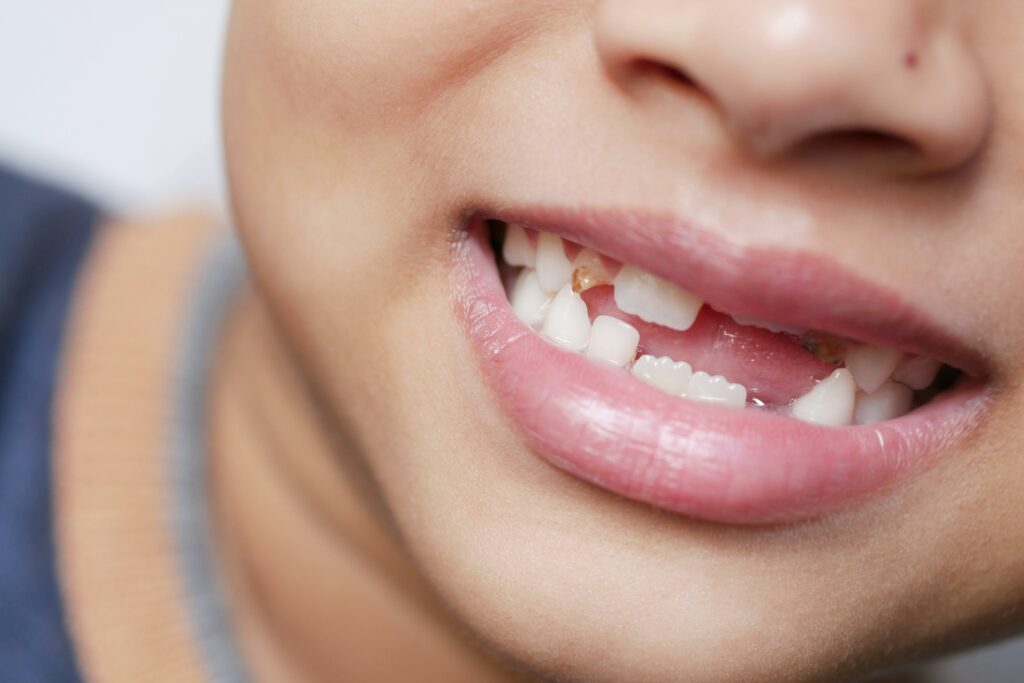
“baby teeth are going to fall out anyway, so it doesn’t matter if they’re damaged or misplaced”. This is a mistake.
Failure to treat a diseased baby tooth often means preparing for an orthodontic orthodontic problem orthodontic problem.
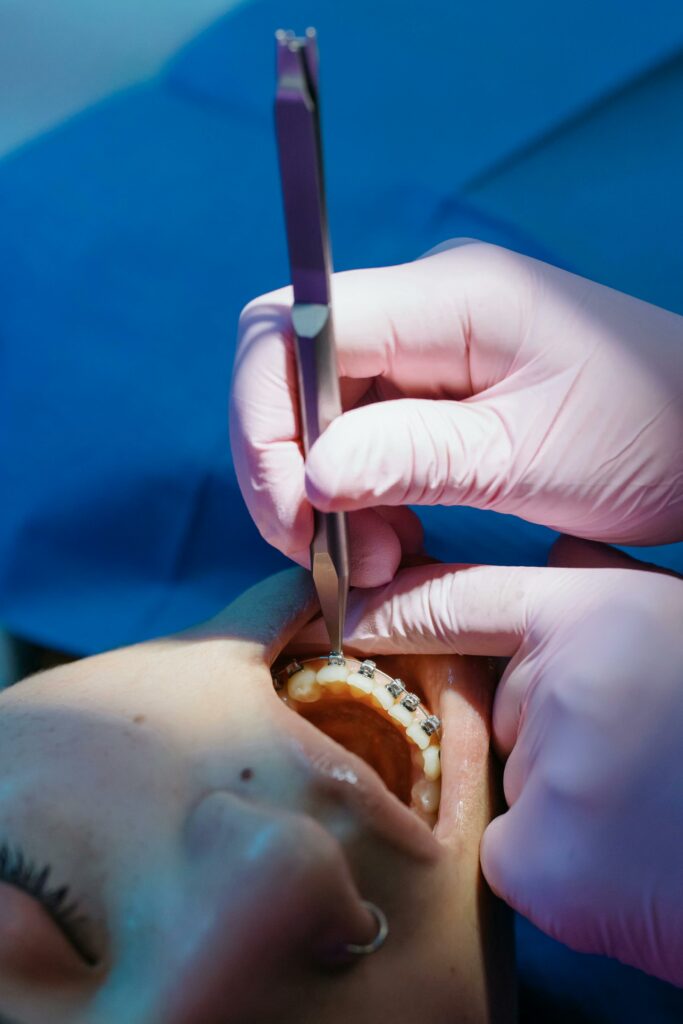
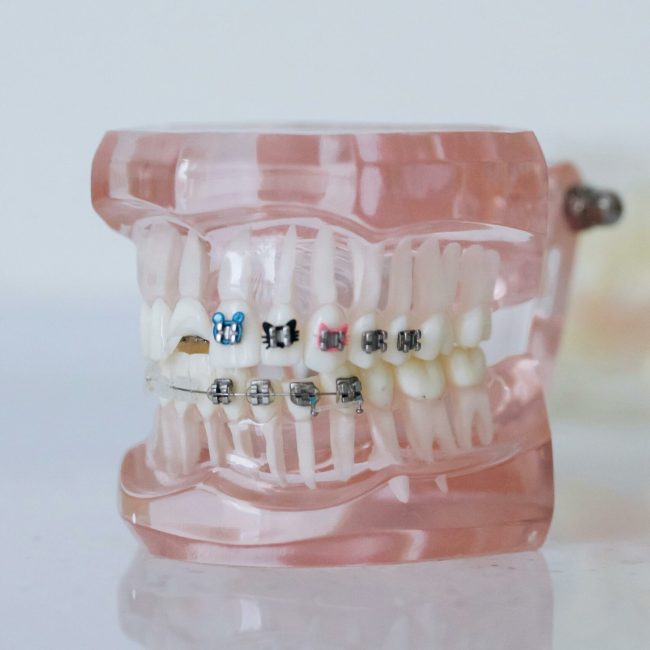

A few precautions are nevertheless necessary:

Before age 17: CNS covers part of the orthodontic costs if treatment begins before your child’s 17th birthday. This date is assessed when the braces are fitted, not during the initial consultation.
This is a strict rule: if the appliance is fitted after the age of 17, no CNS reimbursement is possible. Procedures are reimbursed at 100% of conventional rates for those under 18 at the time of fitting.
Prior authorization procedure: Treatment requires prior authorization from the Contrôle Médical de la Sécurité Sociale (CMSS).
Payment: Repayment is made in defined periods (6 months, 9 months, etc.) as the project progresses.
For cross-border commuters
Cross-border workers affiliated to the CNS enjoy the same rights as residents (100% coverage before the age of 18). Our administrative team will provide you with the necessary documents for your complementary health insurance (French or Belgian: CMCM, DKV, Foyer, AXA, GMI…).
No. Screening from the age of 6-7 is recommended, as some treatments need to be carried out during growth, when milk teeth are still present.
A few days’ discomfort is normal after fitting or adjustment, but disappears quickly and can be managed with paracetamol if necessary.
It varies: 6 to 18 months for an interceptive phase, and 12 to 36 months for a complete treatment.
The “Invisalign Teen” types are suitable from around 11-12 years of age, when most of the permanent teeth are in place.
It includes a full clinical examination and discussion. If necessary, photographs and X-rays are taken to establish the diagnosis. Treatment never begins at this first diagnostic appointment.