


Fixedbraces, commonly known as bands or brackets, remain the orthodontic solution of choice for effectively correcting malocclusions, overlaps and misalignments. Several types of braces and treatments are available, such as invisible lingual braces, which are much more aesthetic and discreet.
Transparent aligners are a discreet alternative to fixed braces, allowing teeth to be aligned with removable, almost invisible aligners.
Comfortable and practical, it can be adapted to everyday life while offering an aesthetic solution for correcting smiles.
Orthodontics in children can detect and correct problems of dental alignment and jaw growth at an early stage. Appropriate treatment from an early age promotes harmonious development and limits the need for more extensive treatment in adolescence.
Whether you’re an adult or a teenager, and whether you live in Mamer, Strassen or the rest of Luxembourg, the orthodontists at Ares Dental will be with you every step of the way, from the initial check-up to the placement of the brace.
Un appareil dentaire fixe est un dispositif orthodontique collé directement sur les dents et non amovible par le patient. Il se compose de trois éléments principaux qui travaillent en synergie pour déplacer progressivement les dents vers la position souhaitée.
Les brackets sont de petites attaches collées à la surface externe de chaque dent. Ils comportent une rainure centrale à travers laquelle passe l’arc orthodontique, et des ailettes qui permettent de fixer cet arc à l’aide d’une ligature élastomérique ou d’un système auto-ligaturant. La pression continue exercée par l’arc sur les dents provoque des micro-mouvements osseux qui réorientent progressivement chaque dent dans la bonne direction. Les rendez-vous de contrôle, espacés de 4 à 8 semaines, permettent à l’orthodontiste d’ajuster l’arc et de maintenir la progression du traitement.
L’arc orthodontique est le fil qui relie tous les brackets entre eux. C’est lui qui exerce la force nécessaire au déplacement des dents. Il est maintenu dans la gorge de chaque bracket par une ligature élastomérique qui, au fil des semaines, doit être remplacée car elle perd de son élasticité. Différents types d’arcs sont utilisés selon les phases du traitement : des arcs souples en début de traitement pour les premiers alignements, puis des arcs plus rigides pour les corrections précises de l’occlusion.
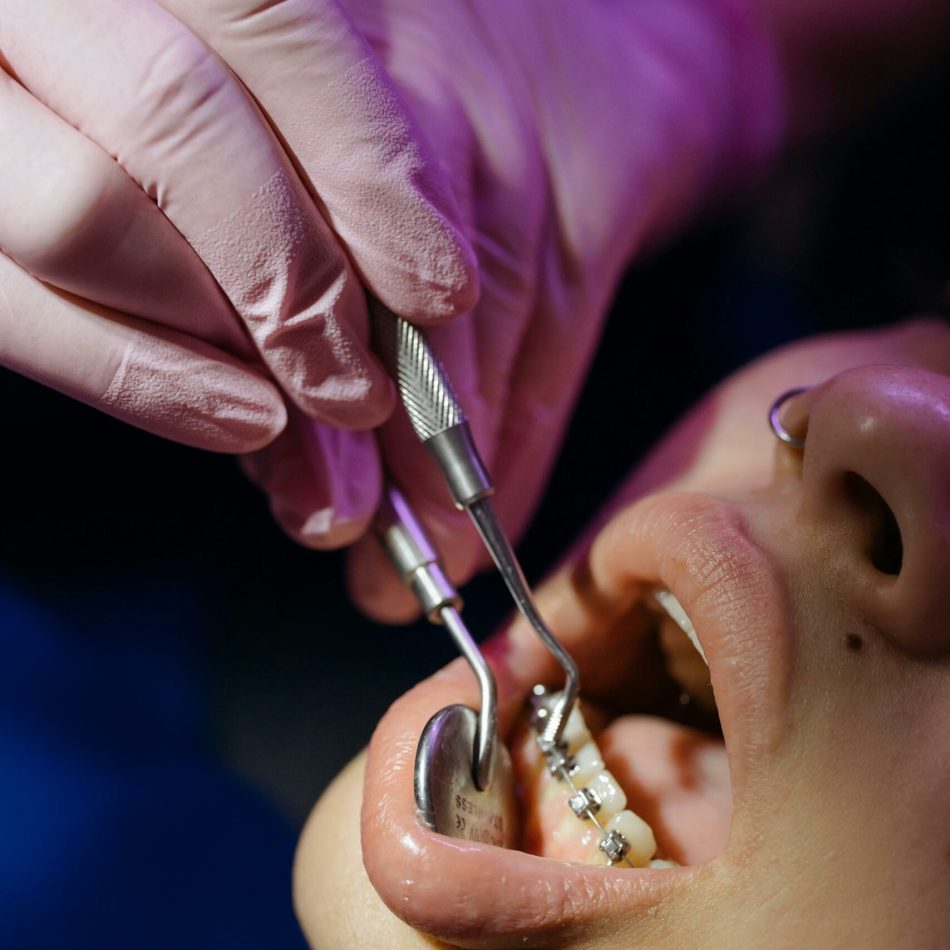
At Ares Dental, three types of brackets are available to meet the aesthetic and clinical needs of every patient. The choice is made in consultation with your orthodontist, depending on the complexity of the treatment, your preferences and your budget.
Metal brackets have been the most widely used braces in orthodontics for decades. Made from stainless steel, they offer optimum resistance and can be used to treat all types of malocclusion, including the most complex cases. Less discreet, they are particularly suited to children and adolescents, and to patients whose priority is clinical efficacy rather than aesthetics. They also have the advantage of being the most affordable.
Ceramic brackets are made from a white or ivory-colored material, making them far less visible than metal braces. They’re an ideal compromise for adults who want to correct their smile while maintaining a well-groomed appearance on a daily basis. A word of caution: ceramic brackets can be slightly tinted by certain coloring foods (coffee, tea, curry). However, good oral and dental hygiene and a few food precautions can help avoid this inconvenience.
Sapphire crystal brackets are the most discreet solution among fixed braces. Translucent, they blend in with the natural shade of teeth and are virtually invisible in conversation or photographs. This material offers excellent resistance to staining and high hardness. It is particularly suitable for adults in professions involving high levels of public exposure.
Brackets are the dental tools most commonly used in orthodontics to correct problems of occlusion and crowding, close gaps between teeth and align teeth.
Brackets are placed individually on each tooth and connected by an orthodontic arch. The bracket has a groove through which the bow passes, and fins where the system that binds the bow is placed.
The pressure that brackets and archwires exert on the teeth enables rapid and effective correction of tooth position.
This device is designed to widen the upper jaw. It is used in cases of posterior crossbite or when there is insufficient space for the eruption of adult teeth.
It’s a fixed device, easy to use and easy to adapt. It should be used during the active growth period (before puberty).
It’s normal to feel a slight pressure when activating. On the other hand, sharp pain is abnormal. If this is the case, stop activating and call us.
The orthodontic arch is held at the bottom of the bracket groove by a small elastomeric ligature.
As the weeks go by, this ligature becomes impregnated with saliva, loses its elasticity and holds the arch less securely.
It becomes impregnated with dental plaque, with the inherent risks that come with the presence of this plaque.
The cost of orthodontic treatment with fixed braces varies according to the complexity of the clinical case, the type of brackets chosen and the total duration of treatment.
As a rough guide, and in line with market rates for braces in Luxembourg, you should expect to pay: Metal brackets: from €2,000 for a complete treatment Ceramic brackets: between €2,500 and €3 ,500 depending on duration Sapphire brackets: premium rate, to be assessed during the orthodontic check-up
A personalized estimate is given to you during your first consultation with Ares Dental. This estimate details the total cost, treatment plan and reimbursement terms.
In Luxembourg, the Caisse Nationale de Santé (CNS) covers part of the cost of orthodontics for children and adolescents under 17, subject to certain conditions. To benefit from this reimbursement, the orthodontist must compile a complete file (photos, 3D digital impressions, X-rays) and submit it to the CNS for prior approval. Once approval has been obtained, the CNS reimburses a significant part of the treatment; the remainder may be covered by certain complementary mutual insurance companies (CMCM, DKV, Foyer…). For adults, orthodontics is not reimbursed by the CNS, but partial coverage may be requested from your mutual insurance company, depending on your contract. TheAres Dental team can help you with all the administrative formalities.
The duration of treatment with fixed braces depends on the complexity of the correction to be made.
As a general rule :
In certain cases of posterior crossbite or insufficient space for the eruption of permanent teeth, a palatal expansion appliance may be prescribed. This fixed appliance is designed to widen the upper jaw. It is used during the active growth period, before puberty, and works by regular activation. It is normal to feel slight pressure during activation. In the event of severe pain, please stop activating the appliance and contact Ares Dental immediately.
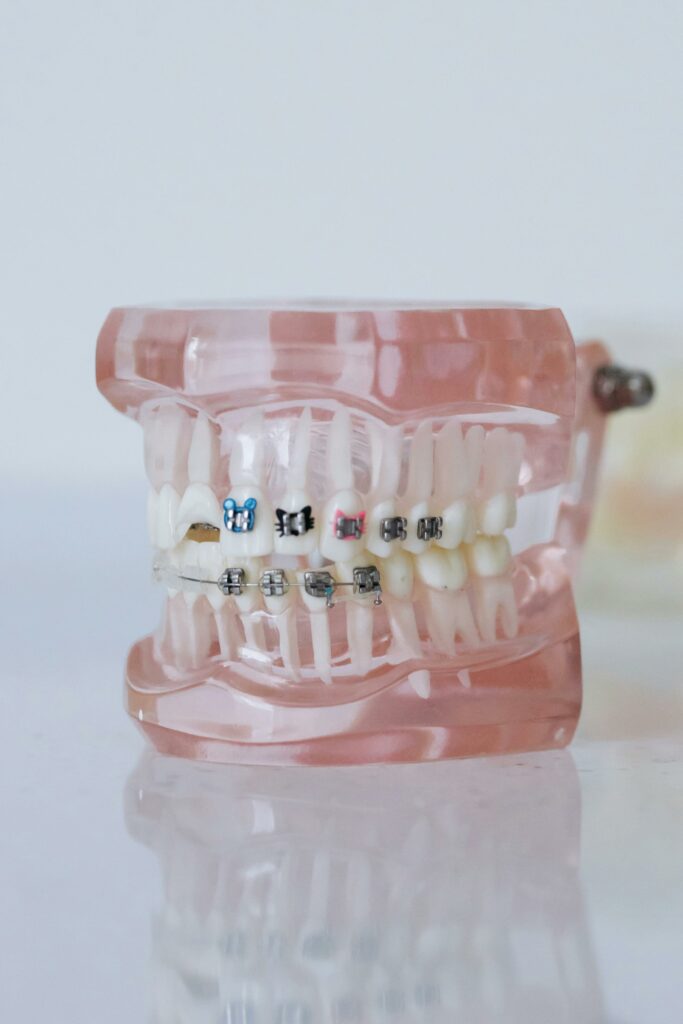
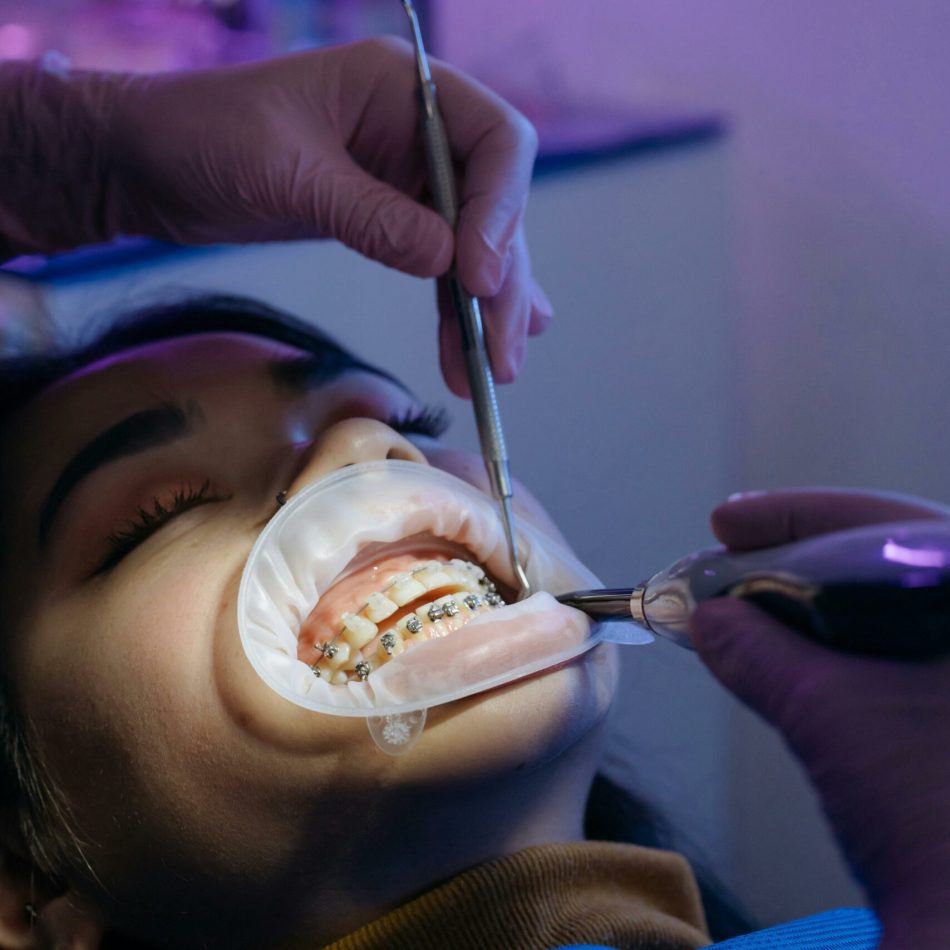
Oral hygiene is the most important aspect of treatment with fixed braces. Plaque builds up more easily around brackets, and can cause white stains (demineralization) on enamel if brushing is inadequate. We recommend brushing your teeth after every meal, paying particular attention to the area around each bracket, and using interdental brushes to clean under the arch. A V-shaped orthodontic toothbrush makes cleaning easier.
Certain foods should be avoided during treatment, as they may damage the appliance or loosen the brackets: very hard foods (crusty bread, raw carrots, ice cream), sticky foods (caramel, chewing gum), tough foods (chunky meat, whole apples). It is advisable to cut fruit and vegetables into small pieces and to prefer soft foods, especially at the start of treatment when discomfort is greatest.
You may have an orthodontic emergencyIf you have an orthodontic emergency, such as a loose wire that can become prickly or irritating, or broken or damaged braces caused by impact or overfeeding, contact Ares Dental on: +352 26 31 35 17 Call us as soon as you notice a problem.
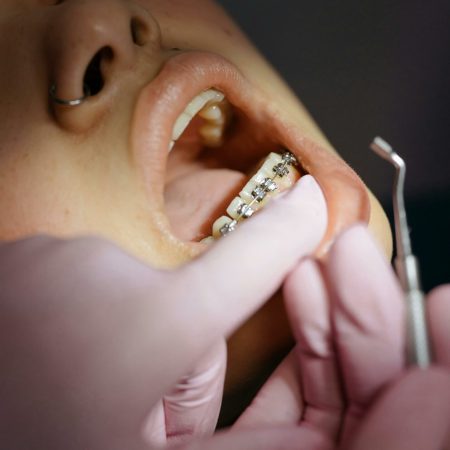
Fitting the appliance is painless. Discomfort generally appears 3 to 4 hours after fitting, and may last a few days as the teeth adapt to the pressure. This discomfort gradually diminishes. Painkillers can be taken if necessary. Orthodontic wax, supplied at the time of fitting, can be used to protect the lips and cheeks in the event of irritation.
Fixed braces are fitted when the permanent teeth are in place, generally from age 11-12. Before this age, removable interceptive braces can be used. There is no maximum age for orthodontics: adults can be treated at any age.
Fixed appliances (brackets) are bonded to the teeth and cannot be removed by the patient. They are indicated for all types of malocclusion, including complex cases. Clear aligners are removable, virtually invisible and suitable for moderate corrections. Your orthodontist will advise you on the solution best suited to your situation during your initial assessment.
If a bracket becomes detached, do not attempt to remove or replace it yourself. Keep it and contact Ares Dental as soon as possible to make an appointment. If the bracket irritates your cheek or lip, use orthodontic wax to cover it temporarily. In the event of an emergency involving a prickly wire or broken appliance, call +352 26 31 35 17.
For children and adolescents under the age of 17, the CNS covers part of the cost of orthodontic treatment, subject to certain conditions (file to be drawn up, prior agreement). For adults, treatment is not reimbursed by the CNS, but may be partially reimbursed by your complementary health insurance. The Ares Dental team can help you with all the necessary formalities.